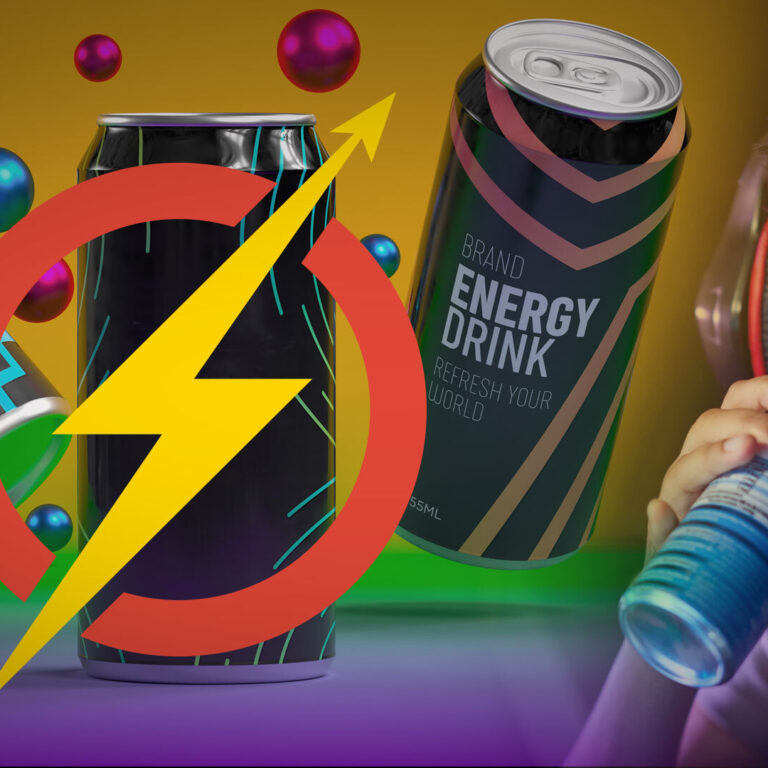
Soft drinks exceed daily sugar limit
A study published in BMJ Open reports that the amount of sugar in the majority of fizzy sugar sweetened drinks on sale in the UK exceeds the government’s recommended daily limit of 30 grams a day (g/d) per 330 millilitre (mL). The study concluded that fizzy sugar sweetened drinks are a major contributor to the intake of free sugars and calls for urgent action for a reduction in sugar content. We’ve reporting on the low standards of social responsibility set by soft drink manufacturers for many years – they are on par with the tobacco industry’s historical record. Greater public awareness is required to force manufacturers to ditch their highly sweetened offerings in favour of less sweet, lower sugar options, We’ve reporting on this for many years. Greater public pressure and reduced consumer demand is required to force manufacturers to ditch their highly sweetened offerings in favour of less sweet, lower sugar options, including those with no artificial sweeteners.
Vitamin D3 supplementation may help improve autism symptoms
A randomised, controlled study of 109 children (85 boys and 24 girls; aged 3-10 years) with Autistic Spectrum Disorder (ASD), published in the Journal of Child Psychology and Psychiatry has found that supplementing children diagnosed with autism with Vitamin D3 improved the symptoms of autism significantly over a 4-month period. Children received 300 IU (7.5 mcg) of vitamin D3/kg/day (not to exceed 5,000 (125 mcg) IU/day). Symptoms of children in the placebo group did not change. This is the first double blinded Randomised Controlled Trial (RCT) showing a clear benefit of vitamin D3 supplementation in ASD patients. ANH-Intl contributed to the European Food Safety Authority’s (EFSA) consultation on Vitamin D supplementation in an effort to prevent further limiting of recommended dosages available to consumers earlier this year.
US FTC may force homeopathic treatments to carry ‘useless’ labels
In a further attack on homeopathy in the US, the Federal Trade Commission (FTC) has issued a new policy statement following a recent public workshop around how such products are marketed to consumers. The statement says that companies producing homeopathic remedies must either make proof of efficacy available to consumers or label them, “No scientific evidence that the product works” or “The product’s claims are based only on theories of homeopathy from the 1700s that are not accepted by most medical experts”. Whilst this is unlikely to impact those consumers who support homeopathic medicine, this has the potential to restrict the market in future. ANH-USA continues to monitor the situation closely.
Why ‘Eating a Rainbow’ is so good for you
Juxtaposed with the recent comments of the Chair of the Royal College of GPs , research published in the Journal of the International Neuropsychological Society has found that compounds in plants responsible for their colour have been shown to have brain enhancing properties. This is of course not new science – it’s just good to see it published in an international, peer reviewed journal. In the study, 43 adults (average age 72 years) were asked to learn and recall unrelated words. Researchers found that people with higher levels of two carotenoids found in plants (lutein and zeaxanthin) had significantly improved brain function. Yet another reason to ‘Eat a Rainbow’ every day — if you still need needed convincing!
ECJ rules that research on detrimental effects of pesticides should be made public
The European Court of Justice (ECJ) ruled last week that research information related to safety tests on the use of glyphosate should be released to those that request it. The public requests fall within the scope of “Information on emissions into the environment” as defined under the Aarhus Convention and the EU law implementing this Convention. This information has previously been withheld as it was deemed to, “… breach the confidentiality of commercial and industrial information”. The ruling deems that information may no longer be withheld when a person requests access to environmental documents for this reason. Greenpeace and Pesticide Action Network Europe have called for the European Food Safety Authority’s (EFSA) scientific opinions to be based on publicly available scientific evidence in future so that all EFSA assessments can be interrogated by independent experts.