Beyond the buzz: How energy drinks and caffeine dependence are rewriting youth behaviour
We unpack the growing public-health threat of youth energy drink dependence in the absence of legislative safeguards


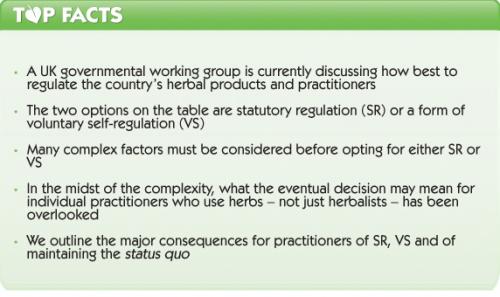
The UK is in the midst of a complex debate over herbal product and practitioner regulation that has been raging for decades. The outcome of the debate is likely to have consequences that echo throughout the European Union (EU). But as the claims, counter-claims and controversy fly, perhaps the most important question is in danger of being overlooked: what will the eventual regulation mean for individual UK practitioners who use herbs – many of whom are not herbalists?
Herbal medicine has always been, and remains, humanity’s most widely used healthcare strategy. Every country in the world is the proud possessor of a dizzying range of indigenous herbs, many with powerful healing properties that form the backbone of healing traditions stretching back centuries – even millennia. Naturalised Indonesian microbiologist and conservationist Willie Smits discovered that orang-utans use as many as 4,000 different herbal species for their health-giving properties: an astounding number that must be the envy of herbalists the world over.
However, trained herbalists are not, and have never been, the only ones to use herbs in their practices. In a modern context, some examples include naturopaths, colon hydrotherapists, homeopaths, osteopaths, nutritional therapists, aromatherapists, acupuncturists, kinesiologists and some mainstream medics – and this list is far from being exhaustive. Unfortunately, at present, the ongoing UK discussions over the future of herbal regulation exclude these practitioners almost entirely.
The debate over herbal regulation is necessarily complex and multifaceted. In such a context, it’s not surprising that many herb-using practitioners aren’t sure how any change in herbal legislation will affect their access to herbs. This is our attempt to clarify things a little, by outlining the major consequences for three broad groups of practitioners, and the general public, of a shift to SR or VS. For completeness’ sake, we also look at the consequences of doing nothing and sticking to the status quo.
We have collated the information in this table, which should be read in conjunction with our earlier article on UK herbal regulation.
We hope this article, along with our previous piece on SR/VS, helps to guide you through the maze of legislation, arguments and counter-arguments that surrounds this polarised issue. Our call to action remains unchanged from the first article:
We unpack the growing public-health threat of youth energy drink dependence in the absence of legislative safeguards

Our weekly roundup of the latest natural news from across the globe in one place. This week: Are digital spaces harmful to young people?; Food preservatives & T2D; Gut health & brain health; Changes to US & UK childhood vax schedules; Being creative keeps our brains young; Updates from ANH-USA; Threats to Free Speech; Post-covid related and much more…

Event Upcoming Member events Members’ Briefing and Q&A – January 2026 Date: Wednesday 21st January 2026 Time: 18:00 (6:00 pm) – 19:30 (7:30 pm) GMT

Check out our snapshot of a wild year defending our right to natural health in an ever more complex world.