
Beyond the buzz: How energy drinks and caffeine dependence are rewriting youth behaviour
We unpack the growing public-health threat of youth energy drink dependence in the absence of legislative safeguards

By Chimnonso Onyekwelu and Melissa Smith
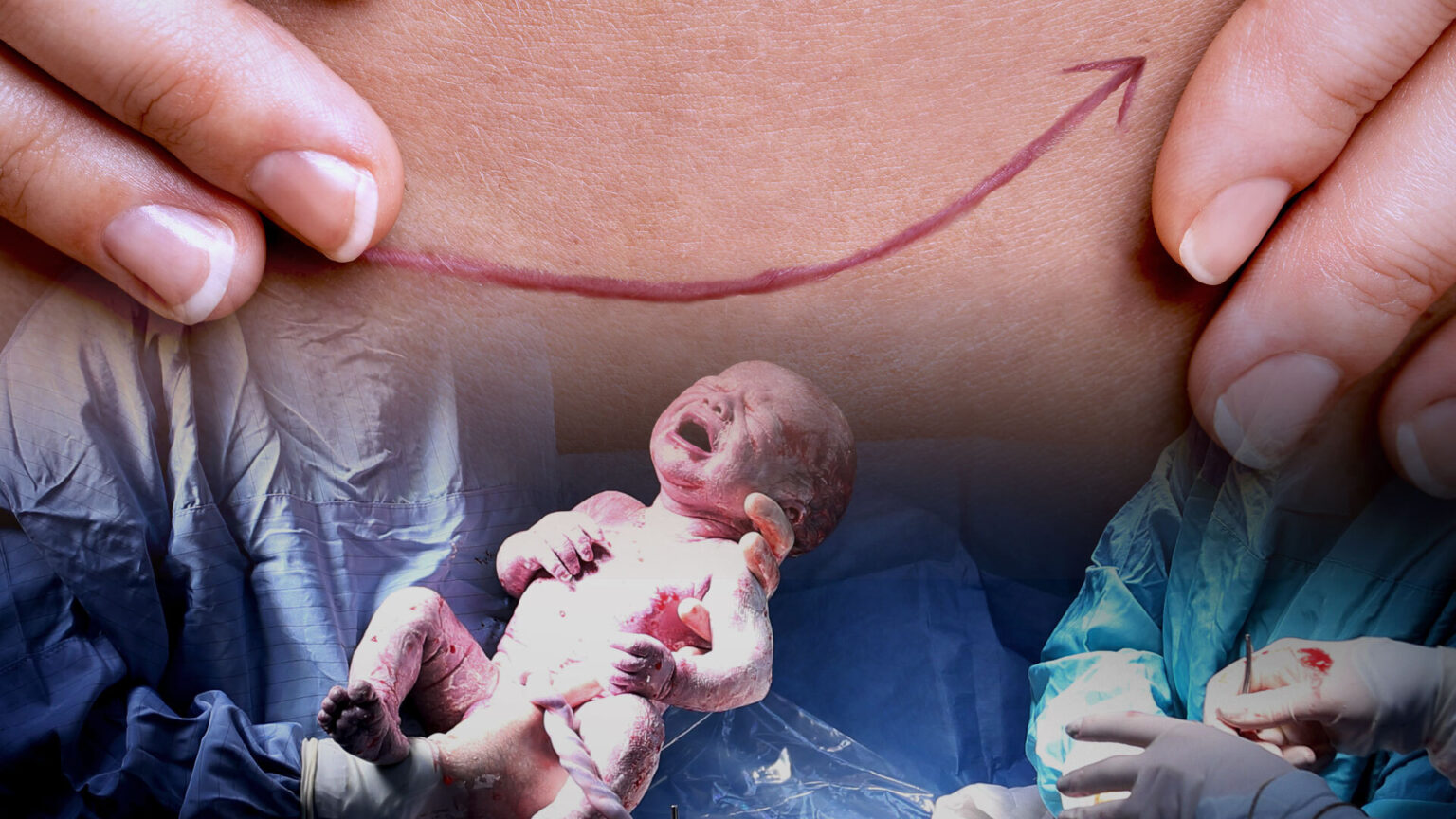
Once reserved as a last resort in life-threatening cases, caesarean sections (C-sections) have evolved into one of the most routinely performed medical procedures in the world. In 1985, the World Health Organization (WHO) advised that no region should have a C-section rate above 10–15%, noting that rates beyond this range lacked medical justification. Fast forward to today, we are seeing staggering increases, with C-sections accounting for over 32% of births in the United States, and nearly 42% in the UK. This trend is perplexing, especially considering that the unprecedented medical advancement of recent decades should logically have reduced, not increased, the need for surgical births.
The growing concern over the rise in C-sections is not without reason. While the procedure remains lifesaving when truly needed, its overuse carries serious risks. For mothers, these include infection, haemorrhage, blood clots, longer recovery time, and complications in future pregnancies. For babies, potential issues range from breathing problems and altered gut microbiomes to increased risks of asthma, obesity, and even neurological impairments. Yet, many women are encouraged to undergo the procedure without fully understanding these consequences.
This rising trend raises urgent questions: are there cultural shifts or medical factors responsible for the increase in C-sections? Why are so many healthy pregnancies being treated as high risk? Why are women being induced prematurely or steered toward surgery without clear medical necessity? And more alarmingly, what role does financial incentive play in this pattern?
A C-section is a surgical procedure in which incision(s) are made in a mother’s abdomen and uterus to deliver a baby (or babies) or sometimes a stillborn foetus. Rather than delivering through the vaginal canal, physicians cut through layers of muscle, tissue, and the uterine wall to remove the baby. Its name, derived from the Latin caedare (“to cut”), reflects its surgical nature–delivering a baby through incisions when vaginal delivery poses significant risks.
The first successful modern C-section was performed in 1881 by Ferdinand Adolf Kehrer, marking a turning point in obstetric care that transformed maternal and infant survival. Despite its undeniable value, C-sections were never meant to replace natural childbirth. It was designed to supplement, not override, traditional midwifery and vaginal delivery. However, today, the procedure is used often in non-emergency cases, signalling a drift from their original intent.
If the risks of C-sections were limited to a single incision and clean surgical removal of the baby, the rising rates might not cause such concern. But a growing body of research tells a different story. Studies (here and here) show that C-sections—particularly elective ones—can significantly increase maternal mortality and morbidity. Compared to vaginal delivery, the risk of life-threatening complications such as severe haemorrhage, uterine rupture, cardiac arrest, sepsis, and hysterectomy is up to five times higher. These risks compound with each subsequent surgery, making repeat C-sections particularly dangerous. One study even found that the likelihood of maternal death after a C-section could be as much as 60% higher, and in certain high-risk cases, up to 700% more. These are not just numbers—they reflect real lives disrupted, families fractured, and recoveries that often stretch far beyond the hospital stay.
But the risks aren’t confined to mothers. For babies, surgical birth comes with its own hidden costs. Research (here, here and here) increasingly points to the C-section’s disruptive impact on gut development and immune system regulation. Babies born this way miss out on essential exposure to beneficial bacteria collected through their journey through the birth canal. Such bacteria play a critical role in shaping early immunity. This disruption—known as gut microbiome imbalance—has been linked to increased rates of asthma, allergies, autoimmune disorders e.g. Crohn’s and coeliac diseases, and even long-term metabolic conditions like obesity. Similarly, a study by Hugo Lagercrantz found that babies born via C-section are more likely to suffer from respiratory distress. Unlike vaginal births, where contractions help squeeze fluid out of the baby’s lungs, surgical births bypass this natural process, leaving newborns vulnerable to breathing difficulties. These effects are often downplayed in clinical settings, but they shape a child’s health trajectory from their very first breath.

Over the last 20 years, the C-section rates in the UK have increased by about 50%, meaning that 1 in 3 children are born via this procedure. Countries like the Dominican Republic, Turkey, Brazil, South Korea and Mexico, all with C-section rates above 50% have also experienced a similar exponential leap in surgical births within a short timeframe. So, what changed?
It appears that several clinical and non-clinical factors may be responsible for this. A commonly cited clinical reason is medical necessity. Physicians often opt for C-sections when the mother has medical conditions, such as obesity, diabetes, older maternal age or multiple pregnancies. Other times, it’s as a result of modifiable indications such as slow or difficult labour, unclear baby heart rate, size or position of the baby or if the pregnancy is from a first-time delivery.
Despite the above, a 2016 study by Consumer Reports, confirmed that up to half of all C-sections performed for low-risk births could have been avoided. This suggests that many surgical births were performed without a clear medical indication. Several studies (here and here) have linked this trend to non-clinical factors like increased C-section request from pregnant women. With the normalisation of C-section as a birthing option, more pregnant women are choosing surgical births over vaginal births even without any medical issues. The commonest reason for this choice is the fear of vaginal delivery and the associated labour pain. Other expressed motivations include the preservation of the pelvic floor, the belief that C-sections are safer for mother and baby, previous traumatic birth experiences and media influence.
Beyond maternal requests, surveys and interviews have also identified physicians’ attitudes to C-sections as a major contributor to the rise. According to the American College of Obstetricians and Gynaecologists (ACOG), many doctors now practice what is known as ‘defensive medicine’; a situation where they choose C-section, particularly in women with a history of prior C-section, to shield themselves from potential malpractice lawsuits. As Dr. Fernando Barros aptly stated, “Physicians feel that, if they give a caesarean, they cannot be accused of not providing the best care.”
Similarly, doctors now routinely schedule healthy pregnancies for C-section for the sake of convenience. Unlike C-section, a vaginal delivery typically takes hours of labour, which sometimes requires the doctor’s physical presence and may necessitate cancelling other appointments, office hours, lunch, sleep and personal plans. C-sections circumvent all these, allowing the doctor to birth the baby within a much shorter time via a surgery scheduled at his convenience. As one obstetrician noted in a National Public Radio interview in the US, “You’re going to pay me more, you’re not going to sue me, and I’ll be done in an hour”.
An often-overlooked precursor to C-section delivery is induction of birth, which is increasingly being normalised. Claims that induction leads to fewer C-sections rely on the results of just one study – the widely criticised, ARRIVE Trial. Read more about the issues with the ARRIVE Trial from Dr Sara Wickham. A recent study found women, in a real-world setting, whose labours were induced at 37 weeks and women having subsequent births, were more likely to experience a C-section due their baby going into distress, than those who went into labour naturally.
There’s a lack of information about the risks of induction and women report feeling pressured/coerced into having an induction and that their views and wishes are swept to one side.
Beyond clinical and cultural factors, the economics of childbirth reveal a troubling incentive structure that may be silently triggering the C-section epidemic. Numerous studies (here and here) have shown that caesarean births are significantly more profitable for both doctors and hospitals where there isn’t a national health service such as the NHS in the UK. On average in the US, physicians earn about 30% more for performing a C-section than for a vaginal birth. For hospitals, the difference is even more stark: reimbursement rates from insurance providers and public health programmes for C-sections are estimated to be around 50% higher. These elevated costs reflect longer hospital stays, surgical and anaesthesia fees, and post-operative care—all of which translate into higher revenue. This financial equation makes surgical birth not only a medical decision but also a business proposition.
Recent data paints an even more unsettling picture. A 2025 US study noted a post-pandemic decline in birth rates, particularly for vaginal deliveries, while C-section rates remained largely unchanged. It also found that C-sections generated over 61% more revenue per birth than vaginal deliveries, suggesting that as hospitals face fewer births, they may be offsetting revenue losses by increasing the proportion of births conducted by C-section. While these findings are striking, they reveal a sobering reality—childbirth, once centred on care and safety, is increasingly being shaped by profit, reducing a profound human experience to a revenue stream.
The rise in C-sections while benefiting hospitals and doctors financially, put women and babies at unnecessary risk. Surgical births without medical need can increase complications, delay recovery, and disrupt early child development. Beyond the physical toll on both mother and child, this trend erodes trust and undermines the core values of maternity care.
To change course, the culture of childbirth has to undergo change and embrace evidence-based solutions that respect a fundamental, natural process that has ensured the survival of the human race thus far. A culture that includes the reintegration of midwifery, respect for individual choice and informed consent, reduction of unnecessary inductions, supporting vaginal birth after C-section (VBAC), and ensuring women receive honest, thorough counselling. Most urgently, policy makers must reverse the financial incentives driving this trend. By paying providers equally or more for vaginal deliveries, the economic bias fuelling the C-section epidemic is removed.
Birth should never be guided by convenience or profit. It should honour the health, dignity, and informed choice of every woman and give every child the best start in life. It’s time to put care, not commerce, back at the centre of childbirth.
>>> Interested in creating healthy babies, naturally? Our course of the same name takes participants on a 15-week journey, following chronologically from preconception-care, the gestation period, preparation for birth through hypno-birthing techniques, successful births, and raising newborns to six-months old, through to toddlers. Explore further. Please share the link with someone who may be thinking of starting a family.
>>> If you’re not already signed up for the ANH International weekly newsletter, sign up for free now using the SUBSCRIBE button at the top of our website – or better still – become a Pathfinder member and join the ANH-Intl tribe to enjoy benefits unique to our members.
>> Feel free to republish – just follow our Alliance for Natural Health International Re-publishing Guidelines
>>> Return to ANH International homepage
We unpack the growing public-health threat of youth energy drink dependence in the absence of legislative safeguards

Our weekly roundup of the latest natural news from across the globe in one place. This week: Are digital spaces harmful to young people?; Food preservatives & T2D; Gut health & brain health; Changes to US & UK childhood vax schedules; Being creative keeps our brains young; Updates from ANH-USA; Threats to Free Speech; Post-covid related and much more…

Event Upcoming Member events Members’ Briefing and Q&A – January 2026 Date: Wednesday 21st January 2026 Time: 18:00 (6:00 pm) – 19:30 (7:30 pm) GMT

Check out our snapshot of a wild year defending our right to natural health in an ever more complex world.